
Koh Lanta Beaches Guide
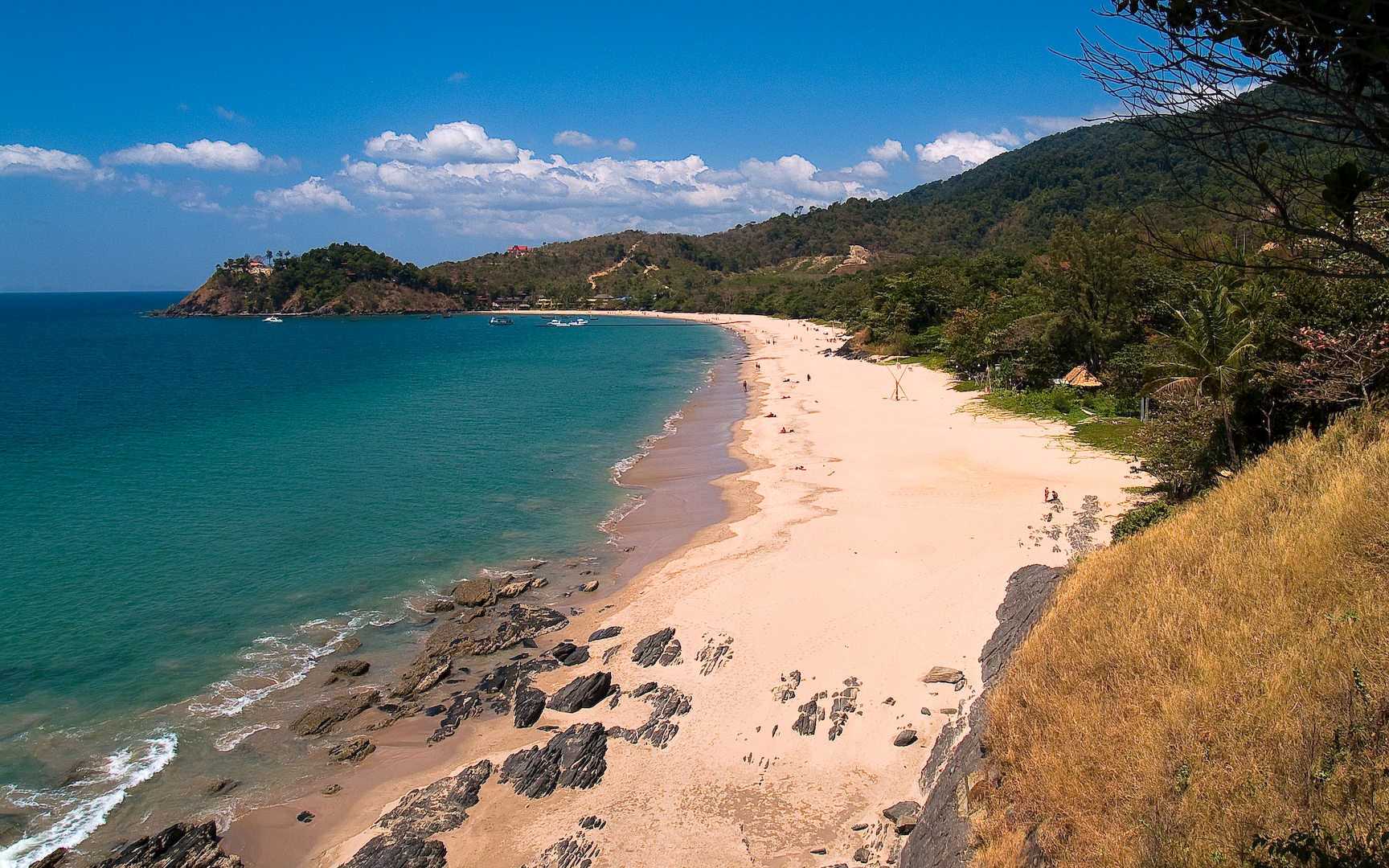
The island runs about 30 km from north to south, with beaches strung along the entire west coast. The pattern is consistent: the further north you are, the more facilities, crowds, and activity you will find; the further south, the quieter and more untouched things become. That gradient is gradual rather than sudden, which makes it easy to find your level. A scooter is the most practical way to explore, and the main road connects all the beaches with no navigation required. One thing you will notice across the whole island is that development is kept in check. No structures are built on the beach itself, and nothing is allowed to exceed the height of the surrounding trees. The result is a coastline that still feels like coastline.
Kawkwang Beach
At the northern tip of the island, barely a kilometre from the ferry pier at Saladan, Kawkwang sits on its own small rocky outcrop and rarely sees crowds despite its convenient location. The beach is sandy at low tide with no problematic rocks underfoot, and a coastal path connects it to Klong Dao to the south. There are no facilities on the beach itself, no shops, and no internet cafes, but that is precisely the point. Bring what you need from Saladan. The views north toward the mountains are striking, and the position makes it one of the better sunset spots on the island's northern end. A short walk uphill brings you to a restaurant with sea views if you want a meal nearby.
Klong Dao Beach
About 2 km south of Saladan, Klong Dao is the most popular and well-equipped beach on the island. It is around 3 km long, wide, sandy, and relatively flat underfoot, with very few rocks in the water. The bay shape works in its favour: the gentle curve shelters the water and keeps it calm and shallow, which makes it genuinely safe for children and confident swimmers alike. Expect the full range of facilities here, from restaurants and beach bars to water sports rental. A well-regarded cooking school operates here if you want an activity between beach days. Snorkelling is limited because the sandy bottom does not support much coral close to shore, but for everything else, Klong Dao delivers.
Long Beach (Phra Ae / Hat Yao)
Long Beach earns its name. The sand stretches for over 4 km, lined with casuarina pine trees that provide shade in the afternoon. It sits about 5 km from Saladan and is the busiest beach south of Klong Dao, drawing a mix of budget travellers, couples, and families. The evening atmosphere along the beach road is lively without being overwhelming: bars open up as the sun drops, and the sunsets here are reliably good. The main road behind the beach has a post office, tourist police, pharmacies, an ATM, and various other practical services. Swimming is safe through high season. Some rock outcrops appear at the far ends of the beach, which offer modest snorkelling. If you are visiting between December and January, accommodation books out early, so plan ahead. The south end of Long Beach connects on foot to Relax Bay.
Relax Bay
Tucked just south of Long Beach, Relax Bay is a small, quiet beach that most day-trippers miss entirely. The water is calm and has an emerald-green quality that makes it popular with visitors looking for somewhere to sit undisturbed. There is no beach bar on the sand, but the main road behind has Thai food options, a pharmacy, a medical centre, and a 24-hour convenience store about ten minutes walk away. It is popular with people doing yoga or wanting a few quiet hours away from the more social atmosphere of Long Beach, which is easily walkable to the north.
Secret Beach
Between Relax Bay and Klong Khong, a dirt track leads down to a very small beach that sees almost no visitors. A single beach bar run by a local family serves water, beer, and the basics, but there is no accommodation, no signage on the main road, and it is easy to drive past without realising it is there. The sunset views are good. If you are on a scooter and have time to explore, it is worth the brief detour.
Klong Khong Beach
Klong Khong is about 3 km long and sits roughly 20 to 30 minutes south of Saladan. It has a more relaxed, bohemian feel than the northern beaches and is popular with travellers who want to stay somewhere for a week rather than passing through. The character of the beach changes significantly with the tide: at high tide the water comes in clear and swimmable; at low tide, rocks emerge along much of the beach and swimming becomes impractical. This tidal pattern is worth keeping in mind when planning your day. In the evenings, a few bars put on fire shows, which draws a small crowd but stays low-key. The road back from the beach has no street lighting, so if you are walking after dark, bring a torch.
Klong Nin Beach
At around 17 km from Saladan, Klong Nin marks roughly the midpoint of the west coast and has a noticeably more local feel than the beaches further north. The beach is about 2.5 km long, open, and generally uncrowded. A line of umbrella trees provides natural shade. The south end of the beach has rock formations with some coral and fish, making it the most rewarding snorkelling on Klong Nin itself. The area behind the beach has boutique accommodation, local restaurants, a dive shop, an ATM, and a medical clinic. It is developed enough to be comfortable but relaxed enough that you will not feel like you are in a resort zone.
Klong Toab Beach
Just a few minutes south of Klong Nin, Klong Toab is a small beach with only a couple of resorts along its length. It is genuinely quiet, and if you want to be based somewhere peaceful with quick access to Klong Nin's restaurants and bars (about 10 minutes away), it works well. Expect nothing in the way of beach facilities; bring what you need.
Nui Bay (Ao Nui)
South of Klong Nin, Nui Bay is a small, typically deserted bay accessible either by footpath through the trees or down a set of steps. The water clarity is good and the snorkelling here is among the finest you can reach directly from shore on the island, with coral and fish visible without going far out. Be aware that parts of the bay are rocky, so swimming is best in the clearer sandy sections. A bar at the top of the hill above the bay has good views and serves simple food; it is a pleasant place to stop. Nui Bay works better as a half-day trip than a base, given the lack of facilities.
Klong Hin Beach
Klong Hin is flanked on both sides by dramatic limestone rock formations that give it a distinct character. The beach itself is small and sees very little foot traffic beyond local fishermen. Facilities are essentially nonexistent. It is worth a stop if you are making your way south and want to see something visually different.
Kantiang Bay (Ao Kantiang)
About 27 km from Saladan, Kantiang Bay is regularly considered one of the most beautiful bays on the island. The crescent of soft sand is close to 2 km long, backed by forested hills that come down steeply on both sides. Despite its reputation, even during busy periods the beach never feels crowded. The water is calm and sheltered, and the rock formations at the edges of the bay hold decent marine life. A dive shop operates here for those who want to go further offshore. A small village immediately behind the beach has a convenience store, ATMs, a tour operator, and a medical clinic, so you are not isolated despite the setting. Kantiang is a good choice for couples or anyone wanting beauty and comfort without having to trade one for the other.
Klong Jark Beach (Waterfall Beach)
A side road off the main southern route leads down to Klong Jark, a quiet beach with very little development. A small seasonal waterfall reaches the beach during and after the rains, and a trail from the beach leads up through the jungle if you want a short walk with good flora along the way. There is no ATM or convenience store here; Kantiang Bay, about 10 minutes back up the road, covers those needs. Klong Jark is worth a stop on any southern day trip but is not the kind of place most people choose as a base.
Bamboo Bay (Had Mai Phai)
Bamboo Bay sits near the southern tip of Lanta Yai and takes around 40 to 50 minutes to reach from Saladan. It is the most undeveloped beach on the island: white sand, jungle pressing in from behind, minimal infrastructure, and water that is consistently clear with less boat traffic than anywhere to the north. The snorkelling is good, with coral and fish close to shore. A national park fee applies in this area: 200 THB for adults and 100 THB for children. Bamboo Bay gives a reasonable sense of what the Thai coast looked like before large-scale tourism arrived.
Practical Tips
Tides matter more on some beaches than others. Klong Khong is the most affected: swimmable at high tide and rocky at low tide. Other beaches with rock formations at their edges (Klong Nin south end, Nui Bay, Kantiang Bay) are also worth timing right.
Getting around is easiest by scooter, available to rent at most beaches for around 200 to 250 THB per day. The main road runs the full length of the west coast. Songthaews (shared pickup trucks) run from Saladan south in the mornings and return in the afternoons, but schedules are informal.
The national park fee applies at the southern end near Bamboo Bay: 200 THB for adults, 100 THB for children.
Beach bar happy hours typically run from around 5 pm to 7 pm, coinciding with sunset. Most beaches with any kind of bar scene, particularly Long Beach, Klong Khong, and Klong Nin, have at least one spot offering discounted drinks during this window. It is worth timing an afternoon swim to end up at a beachside bar as the sun drops.
Diving and snorkelling operators are based at several points along the coast: Saladan has the highest concentration, with additional operators at Klong Nin and Kantiang Bay.