
Stingrays on Koh Lanta
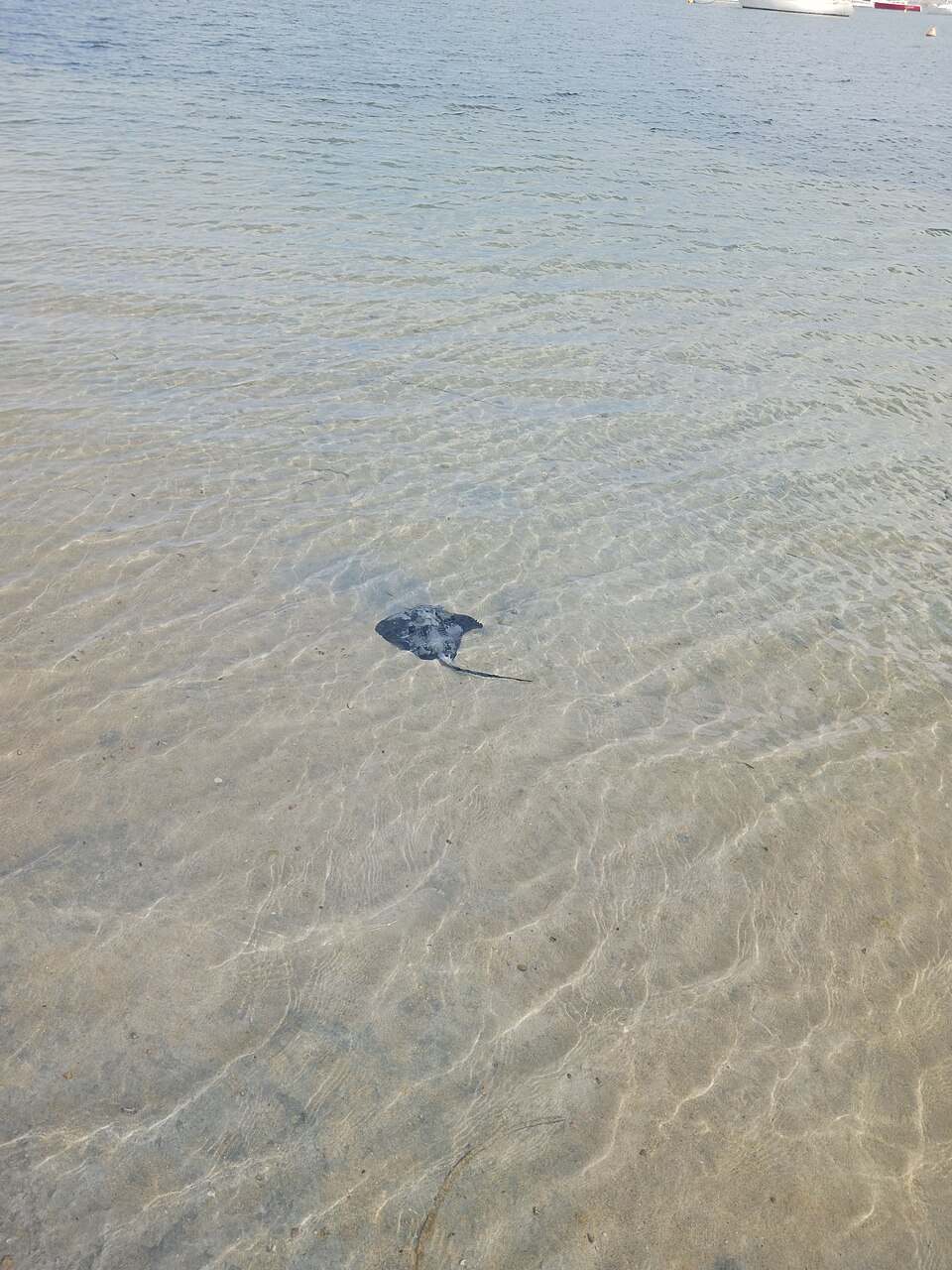
Stingrays live on all sandy beaches on Koh Lanta. They are not aggressive. Stings happen when someone accidentally steps on a ray resting on the sandy bottom. The fix is simple and takes five seconds to learn.
The Species You Will Encounter
The most commonly seen is the blue-spotted ribbontail ray (Taeniura lymma): a flattish ray with electric blue spots on a yellowish body, typically 20-35 cm across. Divers and snorkellers see them regularly. They are not dangerous unless stepped on or trapped. 
Where the Risk Is
Rays rest in shallow sandy water near the shoreline, in seagrass beds, and around coral reef edges. They can be almost invisible against the sandy bottom. The risk is highest when you are walking into the water, especially in shallower areas where the water is ankle to knee-deep.
Prevention: The Stingray Shuffle
When walking into the water, shuffle your feet along the sandy bottom rather than lifting your foot and stepping down. The movement and vibration alert rays and they swim away before you can step on them. This works even in murky water. It works even with water shoes or a wetsuit (a barb can penetrate both). Do it every time you enter the water at a sandy beach. It takes no extra time.
If You Get Stung
Stings are usually to the foot or lower leg. They are painful but rarely life-threatening in healthy adults. 1. Remove any barb fragment carefully, if visible.
- Soak the area in hot water as hot as you can tolerate (ideally 43-45°C / 110-113°F) for 30-90 minutes. Heat breaks down the protein-based venom and dramatically reduces pain. Ask for hot water at the nearest restaurant or resort.
- Vinegar can be used as an alternative soak if hot water is unavailable.
- Seek medical attention: Dr Pad Clinic in Saladan (24 hours), First Lanta International Clinic (Saladan, tel: 092-683-6899), or Andaman International Clinic (tel: +66 63 202 3366).
- Call 1669 for an ambulance if the injury is severe.
Notes
- Stingray incidents on Koh Lanta are uncommon but do happen.
- Divers who maintain distance and move calmly are at no risk; blue-spotted ribbontail rays will not chase you.
- The risk is slightly higher in high season (November-April) when calm, clear water brings rays closer to shore.