
Muslim Culture and Ramadan on Koh Lanta
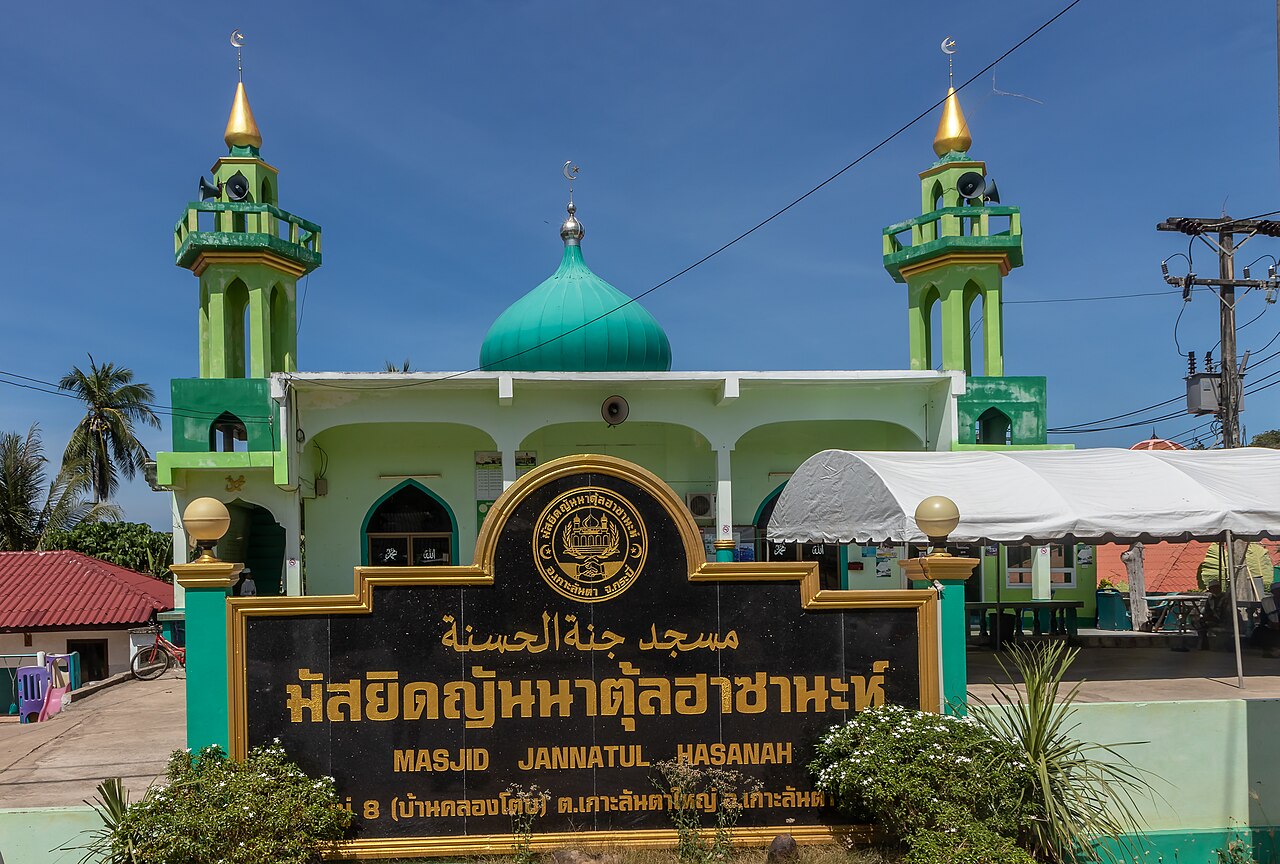
The majority of Koh Lanta's permanent residents are Muslim, primarily of Malay-Thai heritage, and the island has two distinct Muslim sects represented among its communities. This is quite different from the cultural character of Koh Samui, Phuket, or Bangkok. The island has mosques, daily calls to prayer, halal food everywhere, and a local population that dresses and lives differently from central Thailand. While Thailand as a whole is predominantly Buddhist, Ko Lanta is a predominantly Muslim island. This is not a complication. It is just the place. A little awareness goes a long way.
Dress Code
- On the beach: standard beachwear is fine.
- Anywhere else: cover shoulders and knees when walking into villages, markets, Saladan town, or government offices.
- Women especially should carry a light layer when heading away from the beach strip.
- Remove shoes before entering a mosque or a private home. When in doubt, look for a pile of shoes outside a door: if you see one, yours come off too.

Halal Food
Halal food is widely available across the island, from Saladan to Kantiang Bay. Many local restaurants are halal by default. Non-halal food (including pork) and alcohol are available at tourist-facing establishments throughout the island.
Friday Prayers
Friday midday prayer (around 12:00-1:30 PM) is important. Some local businesses close briefly on Friday afternoons; this varies by owner. The call to prayer (Azan) is broadcast from mosque loudspeakers five times daily and is part of life on the island.
Ramadan
Ramadan follows the Islamic lunar calendar and falls roughly 11 days earlier each solar year. During Ramadan, practising Muslims fast from sunrise to sunset: no food, water, or smoking in daylight hours. For visitors:
- Tourist restaurants stay open during the day.
- Some local restaurants close during daylight hours or operate reduced hours.
- Many local restaurants open in the evening for Iftar (breaking of the fast), which is a lively and welcoming time.
- Alcohol is typically not served at local Muslim-run restaurants during Ramadan.
- Avoid eating, drinking, or smoking in front of fasting locals in villages and at markets. It is not illegal, but it is inconsiderate. The end of Ramadan (Eid al-Fitr) is a major celebration. Expect some local businesses to close for several days around Eid.
General Etiquette
Koh Lanta blends Thai, Malay-Muslim, and Chinese cultural traditions, and a few customs apply across all of them: - Never point your feet at people or at religious objects. Feet are considered the lowest and least respectful part of the body.
- Do not step over someone who is seated or lying down.
- Do not touch a Thai person on the head. The head is considered the most sacred part of the body.
- When seated, try to sit at or below the level of elders in the group.
- Do not walk through a group conversation.
- Women must not touch monks or hand objects directly to them.
- Learn the wai (palms pressed together, a slight bow): it is the standard greeting and a sign of respect. Locals appreciate the effort.
- Do not photograph people inside mosques without asking first. A useful phrase: thank you in Thai is "khob khun ka" (said by women) or "khob khun krap" (said by men). Even a rough attempt is well received. Thai-Muslim culture is welcoming and tolerant of tourists. The island has hosted visitors for decades. Basic respect is noticed and appreciated.