
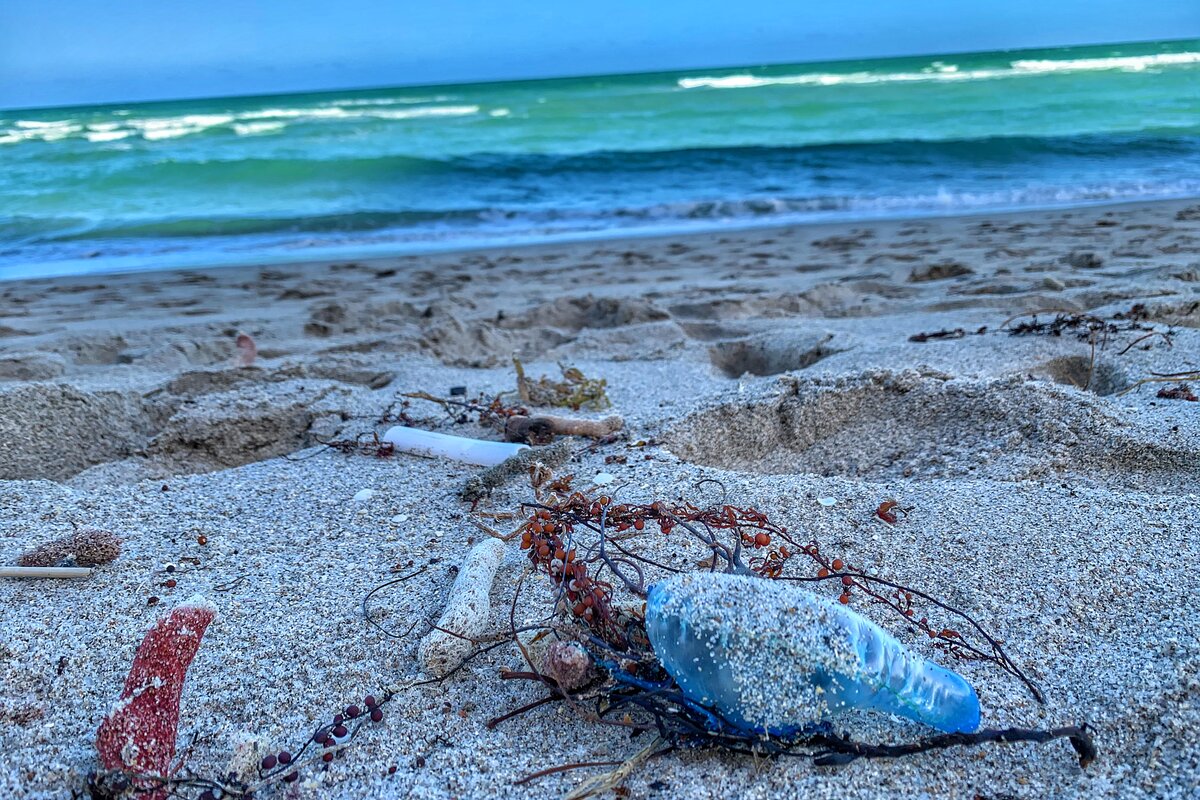
Photo: Physalia physalis / Wikimedia Commons (CC BY-SA 3.0)
Portuguese Man-of-War Warning at Koh Lanta National Park
Lifeguard staff at Mu Ko Lanta National Park issued a warning on 5 June 2026 after Portuguese man-of-war were spotted washed up on the beach at Laem Tonad, inside the national park. Visitors are advised to stay clear of the water at affected beaches and not to touch any blue, translucent creatures found on the sand.
What Is a Portuguese Man-of-War?
Despite looking like a jellyfish, the Portuguese man-of-war (Physalia physalis) is not a jellyfish at all. It is a siphonophore: a colonial organism made up of many individual animals (called zooids) working together as a single creature. The balloon-like float sits above the surface, usually blue or purple, while tentacles trail below, sometimes reaching 10 metres or more in calm water. In rough seas they can extend even further.
The float acts like a sail, which is why Portuguese man-of-war tend to arrive in groups after storms or shifts in wind direction. A single bloom can include dozens or hundreds of individuals.
Why They Appear at Koh Lanta in June
The Andaman coast sees man-of-war most reliably during the southwest monsoon season, which runs from roughly May to October. As prevailing winds shift direction and strengthen, they push open-ocean creatures toward the coast. Koh Lanta, Koh Phi Phi, and the Krabi islands all sit in the path of this seasonal drift.
Koh Lanta has seen previous warnings, and in May 2026 authorities in Phuket issued alerts after a significant wave of man-of-war appeared along Patong and other west-coast beaches. The June sighting at Laem Tonad follows the same pattern.
The Sting
Contact with man-of-war tentacles causes an immediate, intense burning pain. Welts and redness appear quickly. For most people the reaction is painful but manageable; for some, especially children, the elderly, or those with allergies, it can trigger a severe systemic reaction requiring urgent medical attention. The tentacles remain dangerous after the animal is dead, even if it has dried out on the beach.
First Aid
If you or someone with you is stung:
- Do not use fresh water. Fresh water causes unfired nematocysts (stinging cells) to discharge, making the pain significantly worse.
- Do not rub the area. Rubbing spreads venom and triggers more cells.
- Remove any visible tentacles using tweezers, a card, or a stick. Never use bare hands.
- Rinse the affected area with seawater or vinegar. Either is better than fresh water.
- Immerse the area in hot water (around 45°C) for 20 minutes if available. This is the most effective way to reduce pain.
- Take an antihistamine if one is available and if the person has no contraindications.
- Seek medical attention immediately if there is difficulty breathing, chest pain, swelling beyond the sting site, or any sign of allergic shock.
The national park first aid post at Hat Laem Tonad is staffed during opening hours. Krabi Hospital is the nearest major facility.
What to Do If You See One
If you spot a man-of-war in the water or on the beach, leave the area and let park staff or lifeguards know. Do not attempt to remove it yourself. Keep children and pets away from the tideline when warnings are active.
The national park has asked visitors to check warning notices at the beach entrance and to follow instructions from staff. When in doubt, stay out of the water.